'Mr. Tambourine' [Live, 1964] - Bob Dylan

'I have always considered movies evil; the day that cinema was invented was a black day of mankind. Centuries before photography there were talismans, which actually anticipated photographs, since the dyes they used on the cheap vellum produced patterns when they faded in light. A talisman was a sticky flypaper trying to trap a spirit - cunningly you printed on it a “photograph” of the demon you wanted to capture in it. Photography is a blatant attempt to steal the soul. The astral; body is always just latent in a person, and certain cunning and gifted photographers can take an image of the astral body. The whole thing is having an image of someone to control them. If you’re out of your mind with love, it becomes understandable. Any crime is justifiable in the name of Love. In fact, it shouldn’t have to be a “crime”: Anything is justifiable in the name of Love.'
Kenneth Anger
*
'The science and art of causing change to occur in conformity with the Will. Magick is the Science of understanding oneself an one’s conditions. Is the Art of applying that understanding in action.'
Aleister Crowley
*
'Up to now, poetry has followed a wrong course: rising to the heavens or crawling along the ground, it has ignored the principles of its existence and, not without reason, has constantly been rebuffed by decent people. It has not been modest... the finest quality that ought to exist in an imperfect being.'
Lautreamont, Les Chants de Maldoror
*
'The cinema is essentially the revealer of a whole occult life with which it puts us into direct contact.'
Antonin Artaud
*
'Man is ignorant of his nature, of his own being and power. Even his idea of his limitations is based on experience of the past; and every step in progress extends his empire. There is therefore no reason to assign theoretical limits to what he may be or what he may do.'
Aleister Crowley, Magick in Theory and Practice
*
'The greatest of sorcerers would be the one who could cast a spell on himself to the degree of taking his own phantomasgora for autonomous apparitions.'
Jorge Luis Borges, The Circular Ruins
*
'I am my son, my father, my mother and myself.'
Antonin Artaud
from Into the Pleasure Dome, the Films of Kenneth Anger, edited by Jane Pilling & Mike O’Pray, publisher: British Film Institute
Clips from Tom Parker’s Positions (1970)
Sex and Poetry - Jeffrey Harrison
(After a friend asked me why
I didn’t write more poems about sex)
For one thing, it’s hard to get away with,
caught as we are red-handed in the Chamber
of Mimesis, one of those kinky rooms
with mirrors all over the walls and ceiling
where we hope to satisfy our unspeakable needs
but get instead an abyss of dwindling reflections.
Also, it’s less like being in bed with a lover
than standing alone in front of a copy machine
xeroxing her panties and bra. Snaps and garters
give way to the block ant tackle of narrative,
which no amount of fumbling will undo.
Now tell me, does that sound like fun to you?
Sometimes, however, while we are looking
elsewhere, the green-gold dust of pollen falls
and begins to settle over everything
like an idea that takes over without out knowing
and adds a glow to whatever we see,
and we find ourselves in the middle of a sentence,
we want to keep going, clause after clause,
as if the sinuosities of syntax were
the suave unfolding of limbs and skin
and language a seduction to which we love
to succumb, feeling the words take shape in our mouths
and tasting them on someone else’s tongue.
* * *
The Gulf Between the Given and the Gift – Heather McHugh
Between the driven and the drift, you’re moved −
whether air, or a cattle prod, does it.
Art, said the naturalist, in heaven. Said the blind:
Long time no touch. The hooker interjected:
Come again. But I, I once more was unable
even to converse. (I could not get the lion
out of my mind, intending to tear a gazelle
from the love of the leap of her life.) There was much
we would catch. There was much we would miss.
There was gone we would have to do twice.
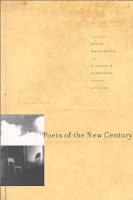
from the anthology Poets of the New Century edited by Roger Weingarten & Richard Higgerson, publisher: David R. Godine

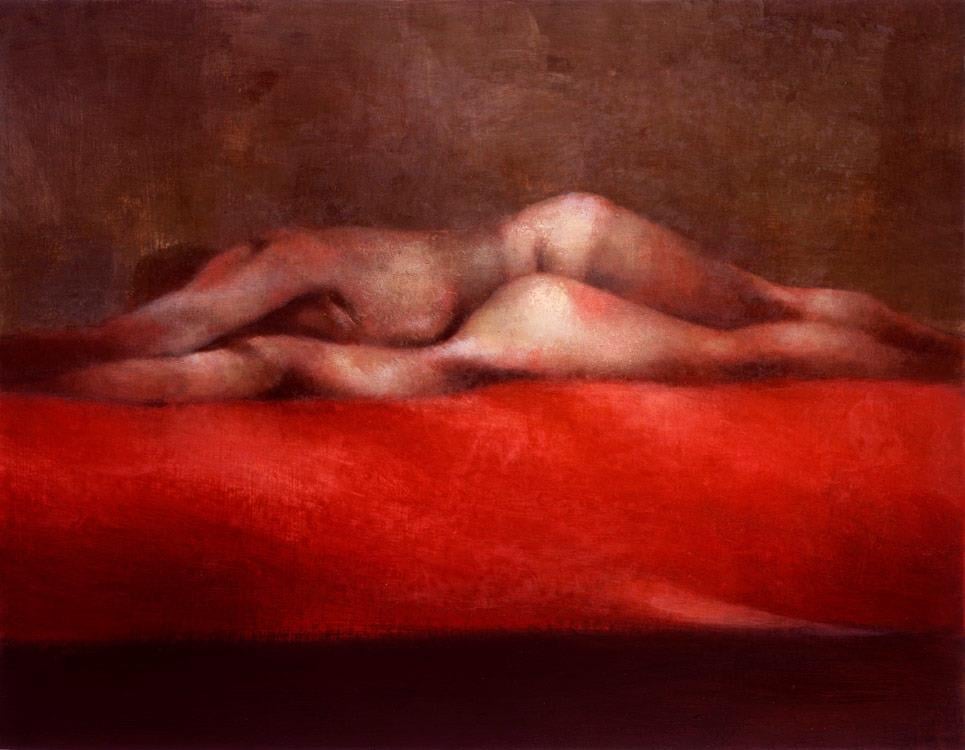

Devolution of the Nude – Lynne McMahon
In Whitman’s day there were the street bathers
spied on by his poem’s spinster, yearning
behind the glass; in Emerson’s day
and Thoreau’s; in the Utopian societies eager
to transmute the dross of Puritanism into the gold
of burnished flesh; in every century or half-
century there have been faddists who know
the six openings of the body must go
unstopped, that the distinction between man
and woman is holy, and the expulsion from
the garden was the garment district’s
first advertisement ploy.
In our day
there are perhaps fewer of these: acid rain
and factory seepage combine to forecast another
ice-age (this time the glacier greens with alloys),
have made stoppering hygenic;
and we’ve discovered in place of the open,
the principle of the closed, the Victorian tenet
that covered is more alluring than bare,
that Shame’s the secret passageway
to Eros. Ant though we may laugh at Marianne
Moore’s remark―“I like the nude,” she said,
handing back Kenneth Clark’s book, “but
in moderation”—it is us
we find
swathed in bedclothes, as if we were asthmatic
invalids under covers, calming ourselves
with penlights and turn-of-the-century novels
whose characters’ cumbersome cloaks
and flannel layers protect them, protect us,
from what is only whispered of: the difficult
birth in the back room, the laying out
of the dead in the parlor, the two occasions
for nakedness that are dreadful
and not for our eyes—
not yet.
* * *
Inspiration– Sherod Santos
Say what we will, at times it seems the rarest
Moments, the most splenetic trills, the most
Ecstatic gestures, are conceived in sloth
And degradation and executed by a great unstaggered
Surge of feeling which bursts forth suddenly
Like a yard given over to day lilies, surprise lilies,
Naked ladies, to the spiked, thumbed, overlooked
Phallus of the yucca plant, to the carmined
Secret of the flowering dogwood’s uninfected petals
Falling around you sunbathing naked in the grass
Like Susanna among the Elders, to the goat-horned
Furl of the climbing fern, to the certain posture
The May apple chooses to display itself, to the heart-
Raking itch of wood lice in the oak, to the coming
Darkness, to the secret balance, to the extreme
And desolate flowering of the night-blooming cereus,
And to all those things, all that loosestrife,
Spiderwort, tickweed and flax, all those hidden
Gothic amplitudes which leave us finally,
Tattooed and senseless, trembling on the stair.
from the anthology New American Poets edited by Jack Myers & Roger Weingarten, publisher: David R. Godine


EVERYONE GETS LIGHTER
Life is lots of presents,
and every single day you get
a big bunch of gifts
under a sparkling pine tree
hung with countless balls of colored lights,
piles of presents wrapped in fancy paper,
the red box with the green ribbon,
and the green box with the red ribbon,
and the blue one with silver,
and the white one with gold.
It’s not
what happens,
it’s how you
handle it.
You are in a water bubble human body,
on a private jet
in seemingly a god world,
a glass of champagne,
and a certain luminosity
and emptiness,
skin of air,
a flat sea of white clouds below
and vast dome of blue sky above,
and your mind is an iron nail in-between.
It’s not
what happens,
it’s how you
handle it.
Dead cat bounce,
catch
the falling knife,
after endless shadow boxing
in your sleep,
fighting in your dreams
and knocking yourself out,
you realize everything is empty,
and appears as miraculous display,
all are in nature
the play of emptiness and clarity.
Everyone
gets
higher
everyone
gets lighter
everyone gets
lighter
everyone gets lighter,
everyone is light.
John Giorno, from Subduing Demons in America: Selected poems 1962-2007, edited by Marcus Boon, publisher: Soft Skull Press
'Όταν λέω «εγώ», ψεύδομαι. Έστω το «εγώ» της πρόσληψης - ουδέτερο και σαφές. Ας το συναρτήσουμε με το «εγώ» της διαμεσολάβησης - υπό αυτή την έννοια το σώμα μου μου ανήκει· ή, για την ακρίβεια, εγώ ανήκω στο σώμα μου. Τι παρατηρούμε; Απουσία επαφής.'
'Όντας προσωπικά ταγμένος στην αντιπαράθεση και τη διαφωνία, ο λόγος διατηρούσε το στίγμα της φιλοπόλεμης καταγωγής του. Ο λόγος καταστρέφει, χωρίζει, και όταν ανάμεσα σε έναν άντρα και μια γυναίκα δεν έχει απομείνει τίποτα άλλο εκτός από αυτόν, δικαίως θεωρούμε τη σχέση λήξασα. Όταν, αντίθετα, συνοδεύεται, γλυκαίνει και, κατά κάποιο τρόπο, καθαγιάζεται με τα χάδια, ενδέχεται ο λόγος αυτός καθαυτόν να αποκτήσει μια άλλη σημασία μιας διανοητικής, αποστασιοποιημένης παράλληλης δράσης, χωρίς άμεσο διακύβευμα, ελεύθερης.'
'[...] πιθανόν δεν έχω κάνει ποτέ πραγματική συζήτηση με άλλον εκτός από γυναίκα που αγαπούσα, και στο βάθος μου φαίνεται φυσιολογικό ότι η ανταλλαγή ιδεών με κάποιον που δε γνωρίζει το σώμα μας, που δεν είναι σε θέση να του προκαλέσει δυστυχία ή, αντίστροφα, να του δώσει χαρά, είναι άσκηση κίβδηλη και τελικά ανέφικτη, γιατί είμαστε σώματα, είμαστε πάνω απ’ όλα, πρωτίστως και σχεδόν αποκλειστικά σώματα και η κατάσταση του σώματός μας αποτελεί την πραγματική αιτία των περισσότερων από τις διανοητικές και ηθικές μας αντιλήψεις.'
'Κολυμπούσα ώρες, στον ήλιο και στο φως των αστεριών, και το μόνο που ένιωθα ήταν μια ελαφρά αίσθηση, αόριστη και θρεπτική. Η ευτυχία δεν ήταν πιθανή προοπτική. Ο κόσμος είχε προδώσει. Το σώμα μου μου ανήκει για ένα μικρό διάστημα· δεν θα επιτύγχανα ποτέ τον δεδομένο σκοπό. Το μέλλον ήταν κενό· ήταν το βουνό. Συγκινησιακά φορτισμένες παρουσίες κατοικούσαν τα όνειρά μου. Ήμουν, πλέον δεν ήμουν. Η ζωή ήταν πραγματική.'
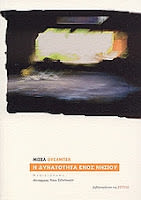
Μισέλ Ουελμπέκ, Η Δυνατότητα Ενός Νησιού, μτφρ. Λίνα Σιπητάνου, εκδ. Βιβλιοπωλείον της Εστίας