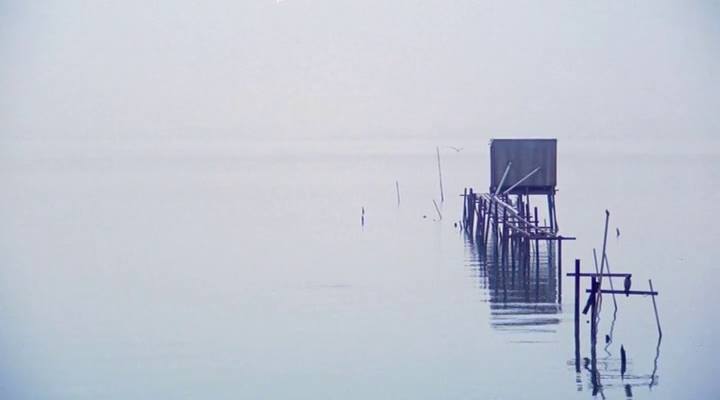
Frame grab from Shinji Imaoka’s Onna no kappa (2011)
'εφήμερο ή εφημερόπτερο, το (Ερωτ. Πινακ.). Οτιδήποτε (έρωτας ή άλλον τι) ζει μόνο μία ημέρα. // Μια πεταλούδα με ημερομηνία λήξης μερικών μόνο ωρών (η προνύμφη της, ωστόσο, πλανάται, μόνη κι έρμη, για αρκετά χρόνια). Το πλέον εφήμερο, ερωτικό, πλάσμα, ασφαλώς. Ο έρωτας είναι η μόνη του βραχυτάτου βίου του ασχολία (δεν έχει χρεία φαγητού, γι’ αυτό και δεν διαθέτει στόμα κατάλληλο για την κατάποση τροφής.) Το εφήμερο είναι μια άσπρη (ή κιτρινωπή ή φαιοπράσινη) πεταλουδίτσα δύο περίπου εκατοστών (τετράπτερο έντομο του είδους των νευροπτέρων, για την... ακρίβεια της περιγραφής). Το συναντά κανείς φυλλομετρώντας και το Περί τα ζώα ιστορίαι του Αριστοτέλη: «Ζει και πέτεται μέχρι δείλης, καταφερομένου δε του ηλίου απομαραίνεται και άμα δυομένου αποθνήσκει, βιώσαν ημέραν μίαν, διά τούτο και καλείται εφήμερον» (ό.π., Ε′, 19). Το εφήμερον, μ’ όλο το περιορισμένο του... ελεύθερου χρόνου του, είναι πλάσμα κοινωνικό στο έπακρο, αποτελεί πάντα μέλος κάποιου, πολυάριθμου, σμήνους· μαρτυρίες παλαιών φυσιοδιφών (και άλλων... ονειρικών παρατηρητών) ομιλούν για τόσο πυκνά σμήνη, που σχηματίζουν νεφελώδη θόλο υπεράνω του ρυακιού ή της λίμνης του... ιδιαίτερου, ταχυδρομικού τους κώδικα· γράφει για αυτούς τους εφήμερους, διαρκείς εραστές και ο... ατυχήσας ερωτικά Ροΐδης: «Τα νέφη αυτά μένουσι μετέωρα επί τρεις ώρας, όσον, δηλαδή, διαρκεί ο βίος των αποτελούντων ταύτα ζωυφίων, περί δε την δύσιν της μόνης αυτών ημέρας τα πτώματα αυτών αρχίζουσι να καταπίπτωσιν ως μικρές νιφάδες χιόνος, τας οποίας καταπίνουσι απλήστως οι ιχθείς» («Τα εφήμερα», διήγημα του 1900).'
'κωλοτρυπίδα (Ανατ.) Η τρύπα του κώλου (το στόμιο του απευθυσμένου, για την ακρίβεια). [...] Είναι για τον ομοφυλόφιλοκάτι περισσότερο από σημείο αναφοράς, είναι ό,τι για τον πιανίστα τα πλήκτρα του πιάνου (και κάτι περισσότερο, ίσως): «Και ο Λουκ, βέβαια, έγλειφε τα σωματικά υγρά του Τραν, οπότε και οπουδήποτε του δινόταν η ευκαιρία: κατάπινε το σπέρμα, καταβρόχθιζε την τρυφερή κωλοτρυπίδα [...]» (Brite). Το ότι η κωλοτρυπίδα εντάσσεται στην ερωτογενή, καυτή, ζώνη της γυναικός ήταν κάτι που γνώριζε και ο μικρούλης (στα χρόνια) Δον Ζουάν του Απολιναίρ: «Όταν ήταν έτοιμη, της τον έχωσα μέχρι τ’ αρχίδια, ανασηκώνοντας τα πισινά της και χαϊδεύοντας την κωλοτρυπίδα της». Συν. κύκλωπας, πίσω μάτι. [...]'
'«Μπέμπα Μπλανς» (Ερωτ. Πινακ.). Λιμπιντικό ψευδώνυμο του Αρχιεπισκόπου, όπως έγραψαν οι εφημερίδες και είπαν στα τηλεοπτικά κανάλια δημοσιογράφοι τύπου Σπύρου Καρατζαφέρη (χειμώνας 2005). Βλ. σχ. λ. κουνιστός, κουσούρι, κιλότα, μίτρα, παπάς, ροζ ράσο, «Σουλτάνα του Αιγαίου», κ.ά.'
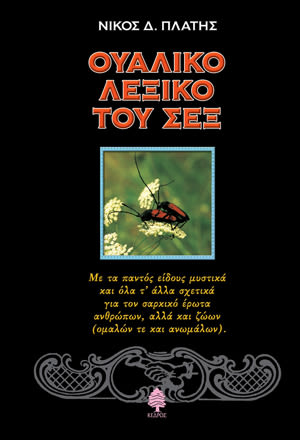
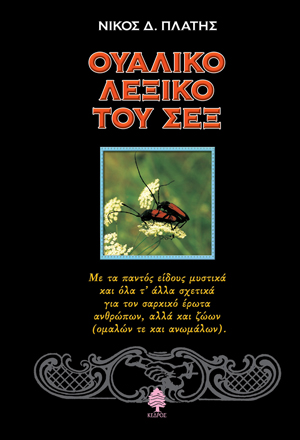
Νίκος Δ. Πλατής, Ουαλικό Λεξικό του Σεξ, εκδ. Κέδρος
'With the institutionalisation of film studies in academia, debates about authorship shifted dramatically. The question ‘who is an author of a film?’ became in the 1970s ‘are films authored’? The seeds of this shift are rooted in literary theory. The anti-intentionalism that took hold in the mid-twentieth century started as an argument about the conditions of validity in interpretation, but spilled over into the nature of authorship, questioning whether authors even had the capacity for intention independent of the ideas already embedded and circulating in language. Meaning rests with the reader, it was argued, but even this is ephemeral. Michel Foucault endorsed this project to some degree, but contended the impression of authorial communication was not vanquished from the reception of a text. He proposed an author function, a fictional surrogate of the author that named a ‘discourse’, but which did not make any claims about the intentions of the real writer. Film critics and theorists of the period adopted this approach as a response to the overly romanticised and politically uncritical notion of the auteur. By divesting filmmakers of authority over the meanings of their creations, theorists valorised a symptomatic approach to interpreting films as a means for evaluating their underscoring ideologies. The search for great directors shifted from the recognition of artistic aptitude to ‘excesses’ in films that betrayed and undermined a film’s determinant capitalist ideology. Not surprisingly, the most progressive films were often directed by the same directors that auteristic critics had celebrated previously. This theory, though, broke the connection back to the director. No longer was the auteur someone like John Ford, but ‘John Ford’, a critical construction emerging from the text. Despite intentions, this theory demonstrated critics’ insatiable need to attribute the source of meaning to an individual, and was therefore a self-defeating approach. What possible interest could there be in a ‘John Ford’, a textual construction, unless it could somehow become reconnected to John Ford? Peter Wollen explains that it is the trace to the director. The theory failed to achieve this aim. This ‘critic as analyst’ ultimately had critics marvelling at their own theoritically determined interpretations. Ironically, Barthes’ proclamation ‘the birth of the reader must be at the cost of the death of the Author’ always suggested this would be the case [...]. The abandonment of authorship as expression exacted a political price. Although developed with the best intentions of critiquing Western capitalism, these theories, in denying the author’s conscious voice, also denied expression to underrepresented groups struggling to make their voices heard. This generated a rift within Marxist criticism. To challenge norms of gender, race and sexuality, the capacity for individual expression was necessary.'
C. Paul Sellors, Film Authorship: Auteurs and Other Myths, publisher: Wallflower
'Καθώς τρομερή φωτιά κατακαίει απέραντο δάσος πάνω σε κορυφή βουνού κι από μακριά φαίνεται η λάμψη της, έτσι απ’ τα θεσπέσια όπλα των στρατιωτών άστραφτε το φεγγοβόλημα ως τον ουρανό μέσα απ’ τον αιθέρα. Και οι στρατιώτες εξακολουθούσαν να βγαίνουν σαν αμέτρητα κοπάδια πουλιών, σαν χήνες, σαν γερανοί και σαν μακρόλαιμοι κύκνοι, που μαζεύονται στις ρεματιές του Καϋστρίου, στο λιβάδι του ποταμου Ασίου, γεμάτοι χαρά, φτερουγίζοντας και γεμίζοντας όλο τον κάμπο με κραυγές, λίγο πριν έρθει η στιγμή να καθίσουν στο έδαφος, το λιβάδι δεν αντηχεί· έτσι η μια ομάδα έβγαινε μετά την άλλη μέσα απ’ το ποδοβόλημα των αντρών και των αλόγων, καθώς μαζεύονταν στον ανθισμένο κάμπο δίπλα στο ποτάμι, αμέτρητοι σαν τα φύλλα και τ’ ανοιξιάτικα λουλούδια. Έτσι λοιπόν οι Αχαιοί με τη μακριά κόμη αντιμετώπιζαν τώρα στον κάμπο τους Τρώες, λαχταρώντας να τους σφάξουν, ανήσυχοι και αναρίθμητοι σαν τις μύγες που μαζεύονται σωρός την άνοιξη γύρω στη στάνη, τότε που οι κάδοι ξεχειλίζουν από γάλα.'
'Όπως τα κύματα έρχονται σπρωγμένα από τον Ζέφυρο στο πολύβουο ακρογιάλι, το ένα πάνω στ’ άλλο, και πρώτα μακριά στο πέλαγος οι κορφές τους αρχίζουν και φουσκώνουν, ώσπου να σκάσουν στη στεριά με βρόντο δυνατό, και αφήνοντας τον αφρό τους να πετά, έτσι οι στρατιές των Δαναών, η μία μετά την άλλη, γλιστρούσαν ανελέητα στη μάχη. Ο κάθε αρχηγός δε έδινε τις προσταγές του στις φάλλαγες· οι άντρες όμως ξεκινούσαν με απόλυτη ηρεμία. Υπάκουαν στους αρχηγούς χωρίς να μιλάνε και δεν μπορούσε κανείς να καταλάβει πώς τόσος στρατός προχωρούσε αμίλητος. Όλων οι πλουμιστές αρματωσιές, καθώς βάδιζαν, άστραφταν. Οι Τρώες, όπως περιμένουν χιλιάδες πρόβατα μέσα σε στάνη πλούσιου άντρα, ώσπου ν’ αρμέξουν το άσπρο γάλα τους, και βελάζουν ασταμάτητα μόλις ακούν τ’ αρνάκια τους, έτσι ξεχύθηκαν απ’το απέραντο στρατόπεδό τους, σηκώνοντας βοή μεγάλη. Γιατί δεν χρησιμοποιούσαν όλοι την ίδια γλώσσα, αλλά οι ομιλίες τους ήταν ανακατεμένες επειδή ήταν άνθρωποι ετερόκλητοι. Ξεσήκωσε τους Τρώες ο Άρης, ενώ τους Αχαιούς η Αθηνά με τα αστραφτερά μάτια, ο Δείμος, ο Φόβος και η Έριδα η αχόρταγη, η αδερφή και σύντροφος του Άρη του αντροφονιά, που στην αρχή φαίνεται μικρή αλλά σε λίγο, ενώ τα πόδια της ακουμπούν ακόμα στη γη, το κεφάλι της έχει φτάσει στον ουρανό· γλιστρούσε τώρα ανάμεσα στους δυο στρατούς ξεσηκώνοντάς τους για αλληλοσπαραγμό, και την ευχαριστούσε ν’ ακούει τα βογγητά των αντρών.'
'We can sustain the belief that a good film is necessarily an expression of one man’s vision, a communication from the director to his audience, only if we can demonstrate a difference in kind and effect between the personal film and the factory movie. The ‘stamp of one predominating creative mind’ must be visibly distinct from the stamp of several collaborating creative minds. Provided that a film has its own unity, it seems unimportant whether the unity was evolved through cooperation and compromise within the production team or conceived by one man and imposed on collaborators.
If the relationships established in a film are significant, it makes no difference to the spectator how they came, or were brought about, or to what extent their significance was intended. A movie has a meaning for the spectator when he is able to interpret its pattern of actions and images. Provided that its relationships are coherently shaped, the film embodies - and can be shown to embody - a consistent meaning which may or may not have been sought, or sincerely felt, by the director.'
V. F. Perkins, 'Direction and Authorship', in Auteurs and Authorship: A Film Reader edited by Barry Keith Grant, publisher: Blackwell Publishing
'Jealousy is something hard to quell. It squeezes the heart like a hot hand. But quelled it must be. On the road to sexual liberation, the banishing of possessiveness is a decisive step; in matters of love, even more than in other domains, property leads to theft. My girlfriend attracts you, and you attract her; ergo, I’d be a shit and a fool to come between you or try to prevent you from sharing the ecstasy and fulfillment of loving each other. My beloved’s pleasure is mine as well, because I love her, and nothing is more important than her happiness. The transparency of our relationship precludes cheating, and hence precludes jealousy also. Of course, the reality isn’t always that simple, or as easy to manage. Quarrels and dramas are the lot of many a couple, and even the toughest sexual adventures are prey to fear, doubt, humiliation, and a myriad of other torments. Nonetheless, we must face our contradictions squarely, however painful or ridiculous they may be, rather than sink into the soothing comfort of obligatory fidelity. Passion is part of adventure, and there is no true adventure without risk. It’s not a matter of making a distinction between love and sex. On the contrary, even if it is never to be repeated, a sexual encounter has meaning only if the lovers involved exchange something tender and powerful. The exchange is total and cosmic. Like Transcendental Meditation or the use of peyote, sexual pleasure is a vector of knowledge and an opening on the universe. We take a sexual trip as we do an acid trip, with the sensation of accomplishing an initiation and a festive ritual. As Jacques Rigaut wrote, “I shall be as serious as pleasure itself.” Every orgasm brings a lighting flash of fulfillment, when for an instant infinity is glimpsed as a familiar friend. Romance is no longer an affair of the heart alone; fucking is an important part of it. Try telling that to our elders, to the people over thirty who for the most part were appalled and disturbed by our escapades! In our eyes, marriage was no longer the goal of couples. Now they could separate and reunite according to their own whim and desire, for in principle each partner could offer this freedom to the other. The last champions of monogamous orthodoxy objected—in vain—that if this was the case, each partner was selfishly protecting his or her own patch of independence. Why, they said, would anyone not help themselves to carnal pleasures that were formerly forbidden, which every present circumstance encouraged them to savor to the dregs?' Jean-Pierre Bouyxou, 'Afterworld: Let It Blow', in Sex Press: The Sexual Revolution in the Underground Press, 1963-1979 compiled by Vincent Bernière & Mariel Primois, publisher: Abrams