




'Heteronormative assumptions interconnect with the institutionalization of heterosexuality and also shape the doing of heterosexuality and being and becoming heterosexual – as well as shaping the doing and being of alternative sexualities. [...] we cannot regard gender, sexuality and heterosexuality as phenomena of the same order, mapping easily on to each other. In particular, we cannot afford to reduce sexuality to the heterosexuality–homosexuality axis, or any other means of classifying sexualities, or reduce heterosexuality to sexuality alone, to one form of sexuality among others. The connections between heterosexuality and gender are much tighter and much more reciprocal than the links between gender and sexuality or sexuality and heterosexuality – precisely because heterosexuality is not only sexual. This is not to say that the ‘sexual’ in heterosexual is unimportant – for it is forms of sexual practice (as well as other non-sexual practices) that help define what constitutes a heterosexual and what defines its perverse other.'
Stevi Jackson, 'Gender, Sexuality and Heterosexuality: The Complexity (and Limits) of Heteronormativity', Feminist Theory, 7(1)
'Even though heterosexuality as a term has not often been explicitly mentioned in Western mainstream discourses of media and common parlance before the 1990s, its position as the sexual norm has nevertheless been produced over centuries in countless linguistic euphemisms, in paradigmatic choices and syntagmatic combinations of gendered terms, not to mention reiterative visual representations. Both images and verbal language have represented the couplehood of man and woman, and the (modern) family formation of hetero parents and children, not only as ideals but as outright moral imperatives. Words and images still sustain the position of heterosexuality as ‘the quiet but centrally organizing signifier of social membership’ [...]. Thus heterosexuality is also signified as the crib of respectable citizenship, literally as the primary production site of new citizens [...]'
Leena-Maija Rossi, '‘Happy’ and ‘Unhappy’ Performatives: Images and Norms of Heterosexuality', Australian Feminist Studies, 26(67)


'If identity is asserted through a process of signification, if identity is always already signified, and yet continues to signify as it circulates within various interlocking discourses, then the question of agency is not to be answered through recourse to an “I” that preexists signification. In other words, the enabling conditions for an assertion of “I” are provided by the structure of signification, the rules that regulate the legitimate and illegitimate invocation of that pronoun, the practices that establish the terms of intelligibility by which that pronoun can circulate. Language is not an exterior medium or instrument into which I pour a self and from which I glean a reflection of that self. The Hegelian model of self-recognition that has been appropriated by Marx, Lukacs, and a variety of contemporary liberatory discources presupposes a potential adequation between the “I” that confronts its world, including its language, as an object, and the “I” that finds itself as an object in that world. But the subject/object dichotomy, which here belongs to the tradition of Western epistemology, conditions the very problematic of identity that it seeks to solve.'
Judith Butler, Gender Trouble: Feminism and the Subversion of Identity, publisher: Routledge


'Παρά την κυρίαρχη διαφθορά της Αναγέννησης, τίποτα δεν κατάφερε να εμποδίσει τη γέννηση ενός Λεονάρντο ντα Βίντσι, ενός Ραφαήλ, ενός Μποντιτσέλι, ενός Μιχαηλάγγελου, ενός Δάντη, ενός Μακιαβέλι, και τόσων άλλων, που άνοιξαν νέους ορίζοντες στην ανθρώπινη συνείδηση. Κι αυτό είναι που μας δίνει μεγάλη ελπίδα: ίσως η παρακμή του σημερινού κόσμου να μην είναι τίποτα άλλο παρά ο πόνος μια χρυσαλίδας που μεταμορφώνεται σε πεταλούδα. Ίσως, από την τελευταία μεγάλη κρίση που έχουμε βυθιστεί, θα αναδυθεί η καινούργια ανθρωπότητα, αυτή που θα μας ξαναθυμάται με την ίδια τρυφερή συμπόνια που νιώθουμε τώρα για τους πιθήκους.'
Αλεχάντρο Γιοντορόφσκι, από το Οι Βοργίες, εικονογράφηση: Μίλο Μανάρα, μτφρ. Άγγελος Δόξας & Πέννυ Μηλιώνη, εκδ. Γνώση
'There is no meaning if meaning is not shared, and not because there would be an ultimate or first signification that all beings have in common, but because meaning is itself sharing of Being. Meaning begins where presence is not pure presence but where presence comes apart [se disjoint] in order to be itself as such. This “as” presupposes the distancing, spacing, and division of presence. Only the concept of “presence” contains the necessity of this division. Pure unshared presence―presence to nothing, of nothing, for nothing―is neither present nor absent. It is the simple implosion of a being that could never have been―an implosion without any trace.
This is why what is called “the creation of the world” is not the production of a pure something from nothing―which would not, at the same time, implode into the nothing out of which it could never have come―but is the explosion of presence in the original multiplicity of its division. It is the explosion of nothing, in fact, it is the spacing of meaning, spacing as meaning and circulation. The nihil of creation is the truth of meaning, but meaning is the originary sharing of this truth. It could be expressed in the following way: Being cannot be anything but being-with-one-another, circulating in the with and as the with of this singularly plural coexistence.'
Jean-Luc Nancy, Being Singular Plural, translators: Robert D. Richardson and Anne E. O’Byrne, publisher: Stanford University Press
'While selfies [...] may evince a certain callousness and indifference to behavioral norms, they also reveal an associative realignment. [...] This realignment moves the onus of experience away from phenomenal engagements with adjacent strangers and towards digital interactions with online communities. The former tend to be ruled by pre-established codes of conduct that ensure civility in place of familiarity; the latter rely on more itinerate and fluid systems of mores developed within (or adopted by) online associative networks in the process of formation.
'The fissure between phenomenal experience and digital interaction originates in the translation of the former into the latter. This kind of translation not only involves a system of mediation (disassociation), but also one of transmission, in which the selfie serves as a “real-time” performance of self oriented towards an audience situated elsewhere. This performance, so integral to processes of individuation and identification within groups, is always defined by a spatial and temporal displacement, as well as a separation between the self and the sign (the selfie) that is its surrogate.'
Adam Levin, 'The Selfie in the Age of Digital Recursion', Ecologies, 20
'In the early 1980s, Michel Foucault wrote that in the face of institutional and state violence and of massive ideological pressures, the central question of our time remained 'Who are we?' [...]. Foucault claimed that in previous epochs, the struggle against domination and exploitation had taken center stage. Now, for an increasing number of people, the fight was against subjection, against the submission of subjectivity. According to Foucault, this circumstance called for a rigorous and historicizing interrogation of power as exerted and experienced. Subjectivity - that multilayered construction of selfhood imagined, performed and assigned - was proposed as the current site of struggle that mattered most. The assertion of 'who we are', particularly for a citizenry massively separated from the engines of representation - the advertising, news, and entertainment industries - is a vital expression of agency. We are not only what we do in a world of images; we are also what we show ourselves to be.'
Michael Renov, 'First Person Films: Some Theses on Self-Inscription', in Rethinking Documentary: New Perspectives, New Practises edited by Thomas Austin and Wilma de Jong, publisher: McGraw Hill / Open University Press
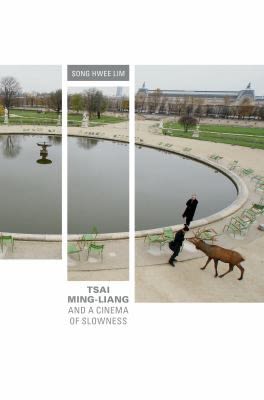
'If myths and memories are the source material for filmmaking, Tsai, like all filmmakers, is first and foremost a mythologist, whose one final possible choice, according to Roland Barthes, is between two equally extreme methods: “either to posit a reality which is entirely permeable to history, and ideologize; or, conversely, to posit a reality which is ultimately impenetrable, irreducible, and, in this, case, poetize” [...]. Tsai’s films, however, demonstrate that the boundary between dreamscape and reality is porous, and that filmmakers can be adept at the tasks of ideologizing and poetizing. Indeed, his cinema of slowness is at once poetry and ideology. For Tsai, dreamscape should not be produced quickly in factory; rather, it should be as unique and distinctive as each person’s fingerprints and signature. Informed by cinephilia, imbued with nostalgia, and signed by an auteur, his cinema of slowness is marked by poetry of stillness and silence [...].'
Song Hwee Lim, Tsai Ming-liang and a Cinema of Slowness, publisher: University of Hawai‘i Press