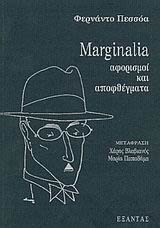
Επινόησε ένα πρόσωπο για τον εαυτό του Πίσω από αυτό Έζησε, έσβησε και αναστήθηκε Πολλές φορές. Πολλές φορές.Το πρόσωπό του σήμερα Έχει τις ζάρες εκείνου του προσώπου. Αυτές δεν έχουν προσωπείο.
*
Χωριό
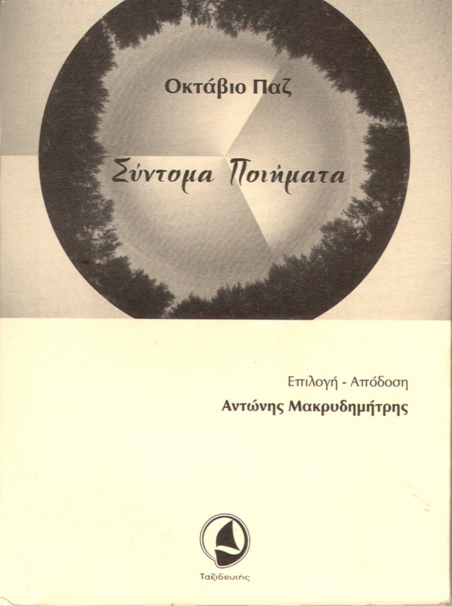
Οι πέτρες είναι χρόνος Οι πέτρες είναι χρόνοςΟ άνεμος Αιώνες ανέμου Αιώνες ανέμουΤα δέντρα είναι χρόνος Οι άνθρωποι είναι πέτρες Ο άνεμος Αναστρέφεται και βουλιάζει Σα μια πέτρινη μέρα
Δεν υπάρχει εδώ νερό παρ’ όλη τη λάμψη των ματιών σου.
*
Towbridge Street, 4
Αυτή η ώρα έχει το σχήμα μιας παύσης Αυτή η παύση έχει το δικό σου σχήμα Εσύ έχεις το σχήμα μιας πηγής καμωμένης Όχι από νερό αλλά από χρόνο Τα μέλη μου σκιρτούν στο άγγιγμά σου Ό,τι ήμουν είμαι ακόμα δεν είμαι Η ζωή μου δίχως βάρος Η ζωή μου δίχως βάρος-το παρελθόν λιγοστεύει Το μέλλον λίγο νερό στα βλέφαρά σου.
Μια κι η ζωή δεν είναι άλλο από μια μακρινή πράξη, Λίγος αφρός που γυαλίζει μέσα σ’ ένα ποτήρι˙ Μια και τα δέντρα δεν είναι άλλο από έπιπλα που κουνιούνται: Δεν είναι άλλο από καρέκλες και τραπέζια σε συνεχή κίνηση˙ Μια κι εμείς οι ίδιοι δεν είμαστε άλλο από όντα (Όπως ο ίδιος ο θεός δεν είναι άλλο παρά θεός) Μια και δε μιλάμε για να μας ακούσουν Παρά για να μιλήσουν κι οι άλλοι Κι ο ήχος έρχεται πριν από τις φωνές που τον παράγουν Μια κι ούτε καν έχουμε την παρηγοριά ενός χάους Στον κήπο που χασμουριέται και πλημμυρίζει αγέρα, Ένα αίνιγμα που πρέπει να ξεδιαλύνουμε πριν πεθάνουμε Για να μπορέσουμε να αναστηθούμε ήσυχα μετά Όταν έχουμε χορτάσει τη γυναίκα˙ Μια που υπάρχει και στην κόλαση ουρανός, Επιτρέψτε μου να κάνω κι εγώ μερικά πράγματα:
Θέλω να κάμω φασαρία με τα πόδια μου Θέλω η ψυχή μου να βρει το σώμα της.
*
ΜΥΑΛΑ ΠΟΥ ΛΕΙΤΟΥΡΓΟΥΝ ΜΟΝΑΧΑ
Μυαλά που λειτουργούν μονάχα μ’ αυτό που λεν’ οι αισθήσεις έφτιαξαν έναν ουρανό ζωομορφικό χωρίς δομή δική του απλή απεικόνιση του ζωικού βασιλείου που βρίθουν χερουβείμ και άγγελοι σαν να ‘ταν κατοικίδια πουλιά -απαράδεκτο από κάθε άποψη!- εγώ υποπτεύομαι πως ο ουρανός πιο πολύ μοιάζει με μια μελέτη συμβολικής λογικής παρά με ζωολογικό κήπο.
Νικανόρ Πάρα, Ποιήματα και Αντιποιήματα, μτφρ. Ρήγας Καππάτος, εκδ. Εκάτη
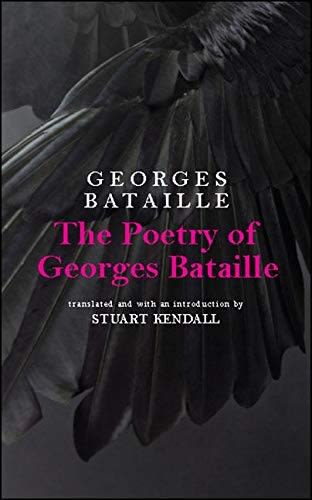
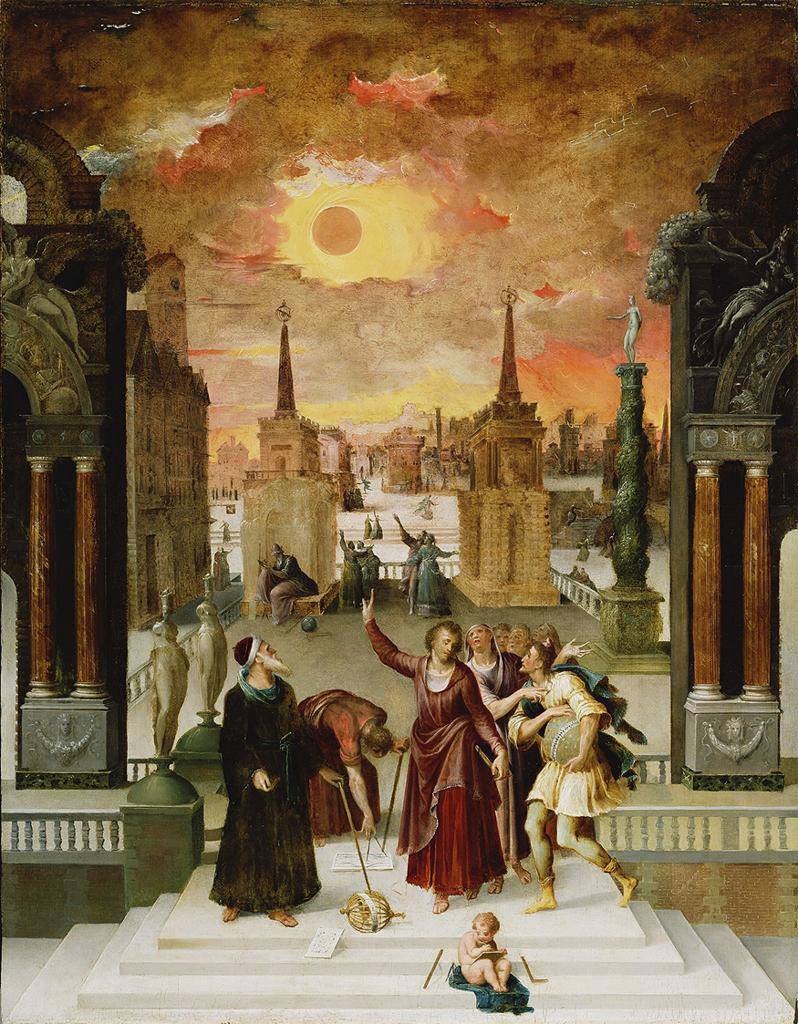
'Bataille draws a sharp distinction between eroticism and sexuality, the latter of which is utilitarian in its mechanical pursuit of procreation. Eroticism on the other hand is expenditure, perhaps the most immediate form of expenditure. It has no goal beyond the immediate expression of desire. Bataille’s understanding of desire confounds Hegel with Sade, the Hegelian quest for identity thourgh recognition with Sade’s interplay of animality and indifference. Where the Hegelian consciousness acts, desiring while remaining simultaneously indifferent to those desires. Sade’s sovereign questions his or her animality and hence also his or her humanity. Where the Hegelian hero masters himself by enslaving others, Sade’s sovereign sacrifices herself and others in a potlach of desire. As a question posed to both animality and to the others, eroticism proposes a means by which human beings can rupture their isolation from one another and from the natural continuum of the world.' Stuart Kendall, Georges Bataille, publisher: Reaktion Books
'If [...] a history of Western discourse seemingly strips the female body of its anus, we might see that repetitive discursive act as a means by which the male subject’s exclusive claim to symbolic reproduction remains more securely in place. We might speculatively look to God as an example of how the gendering of anal eroticism in cultural representation works to forge a relation between the male subject’s penis and power. The penis only gets to be the phallus through a system that endows the penis with all the privileges of anal creation. If God for example is the ultimate sign of the phallus it is by virtue of his status as creator of the world and the word; he has magical and mystical powers and means through which he can create a universe of material and meaning from nothing, from chaos, from fantasies of cloacal creation. He is in the first instance a voice that speaks from nowhere and everywhere — like, I could say at the risk and pleasure of offending, a fart. If read through the unconscious and conscious powers we grant the anus, we can easily say that his omnipotence is, in its most terrifying and sublime aspects, an anal force. He creates because he is the anus — dog spelled backward is God25, or as the Wolf-man himself insistently thinks “God-shit.” If God is also the father and not the mother of the world, he signifies a hybridization that embodies an associative link between that anal power and the male member. When Luce Irigaray reads our symbolic economy as analphallic, she too sees this crossing of embodied fantasies of power and in so doing has already allowed us to see the ways in which the phallus might better be approached not head on, as we have been doing by focusing so much attention on the power of the veiled phallus, but from the proverbial back-door, the anus; for clearly the phallus just wouldn’t be the phallus that it is without the anal power it appropriates under its name; it is not female ‘liquidity,’ as Irigaray argues, that explicitly challenges a patriarchal(anal-phallic) symbolic, but female anality, an anality whose erasure enables and upholds the very distinction she makes between the liquid and the solid across genders. This anal power can only be kept within the father’s terrain if it gets insistently linked to the penis; phallic (anal) power can only be read as phallic (penile) power by a complete removal of the mother’s anus from the scene of symbolic creation or by a fantasy of its reburial. If shit turns into the sacred by means of what looks like the father’s phallic (penile) claim to the word of law, that claim’s security demands the price of the mother’s anus; if her anus continues to exist in all its creative glory, the penis would find itself devoid of the underlying foundation upon which its significance as the mark of the male subject’s superior birthright rests. God’s anal system of creation can only turn into a system of phallic creation if the cloacal theory of birth remains an affair between men or becomes a legacy of the father and the father alone, or of the father and the son. The body and blood of Christ is nothing if not a fantasy of resurrection via a fantasy of divine digestion.'
'If the female anus is said to “mean nothing,” that is of course at some level right; but in other ways it is an attribution of value, a disavowal of the relevance of scenes such as the ones above to discourse and to the creation and recreation of ideological systems of gender, sexuality, creativity, and power -- and, a performative speech act. If the disappearing act of the female anus is nonetheless quite notable in our discursive histories, however, I would suggest that this disappearing act becomes even more pronounced when questions of female anal creation walk onto the theoretical main stage where we seem to forget that we ever knew anything about female anal eroticism (even in discussions about anality or the female anus); this is where we routinely tend to disavow knowledge we already have -- knowledge which tells us that female anal eroticism not only means but means powerfully.'
Denise Fulbrook, Medusa’s Tails and Leonardo’s Heads: Fantasies of Anal Creation in 19th Century Literature and Psychoanalytical Theory, Unpublished Phd Thesis: Duke University
'Georges Bataille [...] suggests that we embrace the qualities of anality normally considered burdensome and unbecoming—here not for purposes of individual pleasure but in order to foster cultural heterogeneity. In “The Pineal Eye,” he presents us with a series of surrealist expositions on revolution in which the anus becomes a highly politicized tool for social advancement. The basic idea is that the present stage of cultural evolution is over-systematized and homogeneous. What it needs is to look back upon the chaos and ugliness of some of its progressive stages in order to reinvigorate itself, and to adopt a more heterogeneous logic. For Bataille, this means the elevation of discordant and excremental forces, cultural cast-offs which disturb the smooth functioning of established social formulae. His first essay, “The Solar Anus,” consists of a series of obscure pronouncements about the cyclical movement of the planets, and how these movements indicate the continual regeneration of life. The “anus” here apparently represents the abjection and turmoil which catalyze this process:
An abandoned shoe, a rotten tooth, a snub nose, the cook spitting in the soup of his masters are to love what a battle flag is to nationality. An umbrella, a sexagenarian, a seminarian, the smell of rotten eggs, the hollow eyes of judges are the roots that nourish love. A dog devouring the stomach of a goose, a drunken vomiting woman, a sobbing accountant, a jar of mustard represent the confusion that serves as the vehicle of love.
Such an indirect, repetitive, and textural manner of speaking can be considered anal because it is more concerned with recreating a mood and a rhythm (experience-based) than with conveying a clear point (aim-based). (The surrealist technique of using words as concrete things, playing with their sounds and taking them out of their expected contexts, is part of a narrative aesthetic that will become the subject of ensuing chapters.) Ideologically, the passage suggests that the uniting force of love is constructed upon the repellent and marginalizing qualities of offal, and that hope is generated from endings and decay rather than from new life. In “The Pineal Eye,” Bataille reveals more about this theory when he generates a bizarre mythology of man’s development based on the evolution of the rear ends of apes. Man could not descend directly from a noble species; instead, he had to pass from a noble but more distant relative (the attractive lemur) through a repugnant one (the vulgar ape) in order to achieve his present elevated status. At the heart of man’s progress Bataille discovers ugliness, represented by the ape’s inflamed posterior (“the enormous anal fruit of radial and shit-smeared raw pink meat” (78)), and upheaval, represented by volcanoes (which erupt “precisely with the shady and comical character associated with the rear end and its excretions” (74)). Bataille’s theory attributes value to the excremental without improving upon its reputation: in his cosmogony, the anus is not prettied up, but its inherently objectionable character is adopted as a source of otherness necessary to cultural development.'
Erika Katz Clowes, The Anal Aesthetic: Regressive Narrative Strategies in Modernism, Unpublished Phd Thesis: University of California
Clip from Krzysztof Kieslowski’s La double vie de Véronique (1991)
Λουλούδια στραβά στοχεύουν στον ευθύ θάνατο.
* * *
Άνθρωπος πεθαίνει ― Λιμανιού φώτα σε ακύμαντη θάλασσα.